

How do interest rates affect the forex market?
Forex is one of the most dynamic markets. Many factors influence currency quotes, but one of the key ones is interest rates.
One of the basic rules of investing says: invest in what you understand. So before making any investments, it is worth taking the trouble to learn about a particular market and what influences the valuations of various instruments. This also applies to the foreign exchange market commonly referred to as the forex market (you can read more about it at https://www.xtb.com/pl/edukacja/forex), where many people are looking for opportunities to make above-average profits, in a relatively short period of time.
The volatile forex market
The widespread globalization and democratization of financial markets has meant that today they are in fact an interconnected system of vessels. What happens in the currency market is often also reflected in stock market quotations and vice versa. And after all, there are plenty of factors that can affect currency quotes as well as stock market indices.
Factors affecting the quotation of currencies and stock indices:
- Central bank decisions (especially regarding interest rates),
- macroeconomic data,
- monetary policy,
- investor sentiment.
Investors, mainly those who set their sights on short-term trading, must therefore maintain increased vigilance. In the forex market, however, decisions of central banks are of particular importance, especially those concerning the size of interest rates in a given country. They are the ones that have the greatest impact on currency quotations. Why is this the case?
Key interest rates
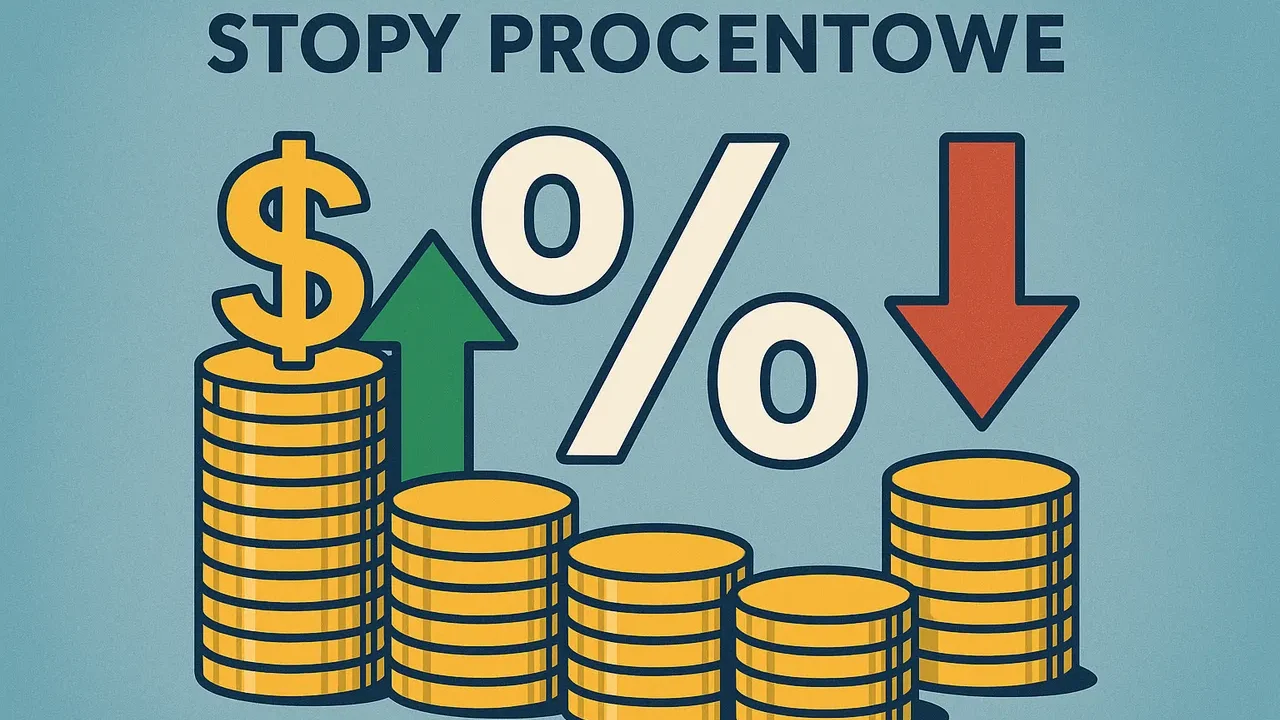
In a nutshell, we can say that interest rates are the cost of currency. So the higher the interest rates, the more expensive the currency should be.
higher rates = stronger currency
lower rates = weaker currency
So, in theory, high interest rates or interest rate hikes should favor the currencies of countries with this type of situation. In particular, it should work in their favor, relative to the currencies of countries with lower interest rates.
Such an approach is, of course, a gross oversimplification. For the reality is more complex. After all, when talking about forex rates, you have to take into account not only the level of rates set by central banks themselves, but also the market level of interest rates. These change every day and tell you, among other things, how inflation will develop, what the central bank’s policy may look like in the future, or how the economic condition of a country is assessed.
In practice, therefore, a mere increase in interest rates by a country’s central bank does not necessarily automatically translate into a strengthening of that country’s currency. This may happen for several reasons. Such a phenomenon can be observed, for example, in a situation in which investors, through real interest rates, have already priced the central bank’s move. Hardly…sometimes an interest rate hike can even translate into a drop in the price of the currency. This can happen when the market has previously priced in a rate hike on a larger scale than the one decided by the central bank.
Making money on interest rates
Interest rates are undoubtedly one of the key factors affecting the valuations of individual currencies. Their formation can be the subject of market speculation, but they are also sometimes used in strategies with a slightly longer time horizon. In the market dictionary they are called carry trade strategies. What do they consist of?
Investors who use this strategy look for the currencies of countries where the difference in interest rates is relatively large (since specific currency pairs are traded on the forex market). So, in a country where interest rates are at a lower level, investors borrow its currency, in order to be able to sell it, and with this money buy the currency of the country where this interest rate is higher.
All this is done to make money on the interest rate differential, which in the forex market is expressed in swap points charged daily. When they are positive, they are a profit for the trader. Otherwise, they generate additional costs.
Of course, one must keep in mind that currency quotes fluctuate on a daily basis, and this is influenced by the aforementioned market interest rates. This means that unfavorable movements can completely absorb the profit that will come from the carry trade strategy. This is a risk that investors must keep in mind. Another thing is that risks are not inherent in investment activities, and this makes it necessary to approach them responsibly.
Risks of carry trade strategies:
- Exchange rate volatility can wipe out profits,
- unfavorable changes in market interest rates,‖ – unfavorable changes in market interest rates.
- The need for constant monitoring of the market.
Summary
Interest rates are one of the most important factors affecting the forex market. While they may give investors a chance to profit, they do not guarantee success. Market volatility and investors’ anticipatory expectations mean that making investment decisions requires knowledge, analysis and caution.