


France debt crisis fears deepen after violent riots, hitting euro and CAC 40
Fears surrounding the France debt crisis intensified on Monday as widespread social unrest swept the country. French government bonds tumbled, pushing borrowing costs higher and triggering declines in the euro and Paris-listed equities.
⚡ Key numbers:
- 10+ basis points – surge in the French 10-year government bond yield
- 1.34% – drop in the CAC 40 stock index during morning trade
- 0.28% – decline in the euro against the US dollar reported by CNBC
- nearly 60% – share of French public debt held by foreign investors in 2026
Street protests reignite sovereign debt anxieties
Violent protests over living costs and strained public services erupted across Paris, Lyon, and Marseille over the weekend, resulting in attacks on government buildings, looting, and hundreds of arrests. French President Emmanuel Macron condemned the violence in a televised address, stating that those who attacked public buildings must pay for their crimes.
The escalating civil turmoil rattled sovereign debt markets, pushing France's benchmark borrowing costs toward their highest levels since 2002. The extra yield demanded by investors over German Bunds hovered in the 135 to 140 basis point range, a spread unseen since the eurozone sovereign debt crisis over a decade ago.
“It looks like either the bond markets riot, or the people riot, or both”
— Mike Bell, head of market strategy at RBC BlueBay Asset Management (via CNBC)
Euro under pressure across international currency markets
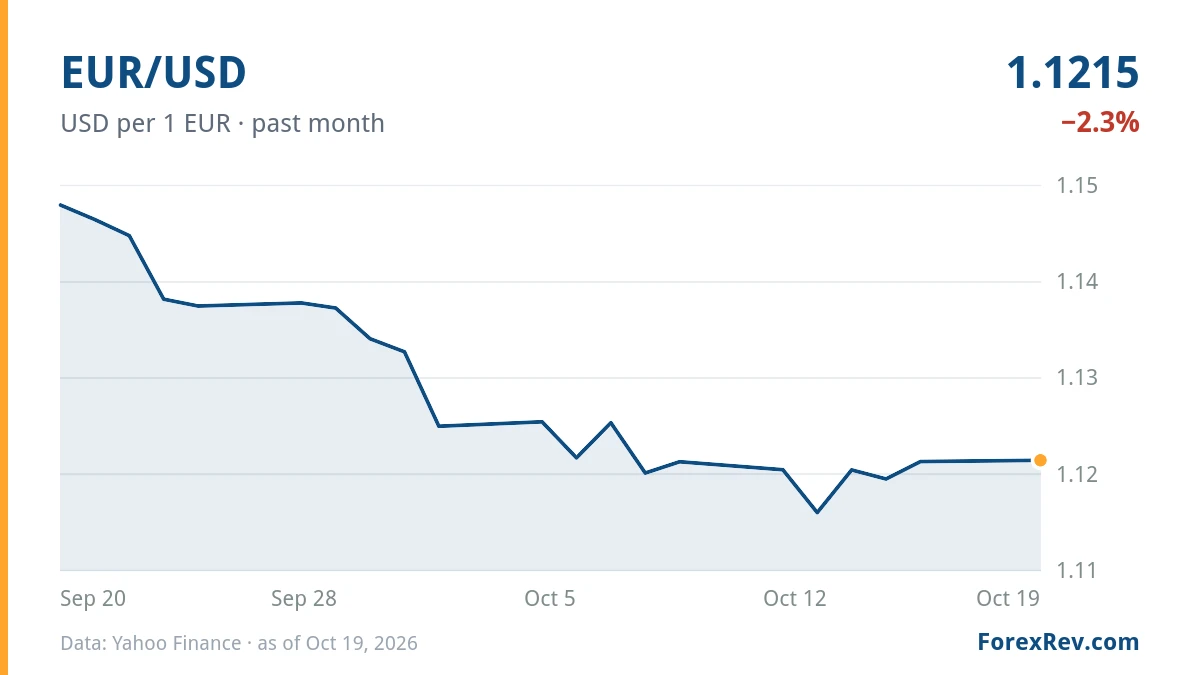
The single currency faced immediate selling pressure across major pairings as political risks resurfaced. CNBC reported that the euro declined 0.28% against the US dollar and 0.24% against the British pound, with EUR/USD trading near 1.1213. Widespread volatility also pushed the EUR/CAD cross down to around 1.5800.
Market strategists noted that while short-term interest rate differentials might typically favor the currency, the fiscal impasse in France imposes a distinct risk premium. These fiscal hurdles emerge just as European policymakers face complex monetary balancing acts, as detailed in our coverage of how the ECB backed into a corner navigates economic headwinds.
Foreign ownership raises volatility in Paris-listed assets
Foreign ownership of French sovereign debt has expanded significantly, climbing from roughly 48% in early 2022 to nearly 60% at the start of 2026. This heavy reliance on global capital leaves French bonds particularly exposed when political paralysis threatens fiscal consolidation plans.
Banque de France Governor Emmanuel Moulin told CNBC that recent yield spikes stemmed from political uncertainty, while maintaining that reaching a 3% budget deficit in 2029 remains achievable. Nevertheless, equity investors took a defensive stance, driving the Paris CAC 40 index down 1.34%.
What to watch next
- Tuesday release of the German ZEW economic sentiment index
- Friday preliminary composite PMI data for the eurozone
- Further French government policy responses to the street unrest
Market volatility brings opportunity, but also risk. If you trade through CFDs, choose a regulated broker — compare them in our forex broker ranking.
Frequently asked questions
What sparked the recent market sell-off in France?
Violent street demonstrations against the rising cost of living led to hundreds of arrests, heightening concerns over political stability and government borrowing.
How high is the French debt spread over Germany?
The 10-year OAT-Bund spread traded between 135 and 140 basis points, holding near levels last recorded during the European debt crisis.
What proportion of French debt is held abroad?
Overseas investors hold nearly 60% of French sovereign debt as of early 2026, up from around 48% recorded at the start of 2022.
Sources: FXStreet, CNBC, Comparic, The Guardian, Al Jazeera, Yahoo Finance.
Disclaimer: This article is for information purposes only and does not constitute investment advice. Data as of Oct 19, 2026, 13:00 may vary by source. Trading leveraged CFDs carries a high risk of losing money.
This article contains AI-generated content.