


France debt crisis deepens as violent protests spread across European capitals
Fresh outbreaks of violent unrest have shaken major European economies, as clashes erupt over fiscal austerity and public spending cuts. The turmoil adds severe pressure to the France debt crisis, intensifying market fears of broader contagion across the Eurozone.
⚡ Key numbers:
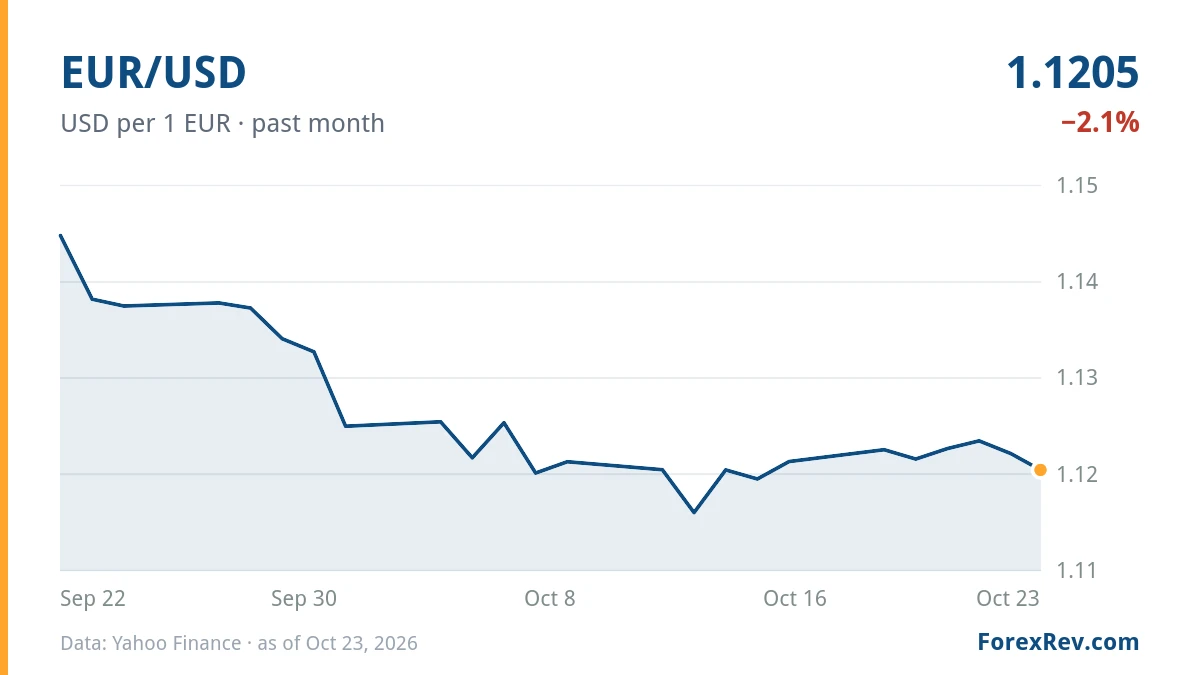
- EUR/USD dropped 0.16% to 1.1204
- Dollar Index (DXY) climbed 0.14% to 101.75
- DAX benchmark declined 0.75% to 25,182 points
- S&P 500 slipped 0.52% to 7,624 points
Police clash with demonstrators in France, Italy and Spain
Demonstrations across the continent have turned violent once again, according to Al Jazeera. Police forces clashed with protesters in France, Italy and Spain as public discontent boiled over regarding escalating living costs, cuts to essential public services, and surging military budgets.
The widespread unrest complicates government efforts to maintain fiscal discipline. Previous episodes have demonstrated how France debt crisis fears deepen after violent riots, hitting euro and CAC 40, reducing political leeway for badly needed fiscal consolidation.
Widening bond spreads raise contagion alarms
Financial markets are closely tracking the risk of cross-border spillovers, with Investing.com questioning whether Paris's fiscal woes could spread through the monetary union. Investors demand a higher risk premium to hold French sovereign debt, causing the spread between 10-year French OATs and German Bunds to widen.
Market history shows that when fiscal trajectories in key member states unravel, sovereign debt anxiety quickly infects peripheral bond markets. As noted during previous spikes, French bond yields surge to 24-year high as political unrest batters the euro, putting systemic pressure on the broader European financial architecture.
Currency and equity markets react to fiscal strain
The geopolitical friction quickly left its mark on currency pairs. The euro slid against the greenback, with EUR/USD dipping 0.16% to 1.1204, while the US Dollar Index pushed higher to 101.75. Equity markets echoed this caution, sending Germany's DAX down 0.75% to 25,182 and Wall Street's S&P 500 down 0.52% to 7,624 points.
With budgetary impasses lingering, institutional capital continues to rotate toward defensive assets, questioning whether the euro area can contain structural deficits without renewed intervention.
What to watch next
- European bond auction results and OAT-Bund spread trajectories
- Legislative budget debates in France and Italy amid street opposition
- Policy commentary from European Central Bank leadership regarding sovereign fragmentation risks
Frequently asked questions
What caused the recent protests across Europe?
Citizens in France, Italy, and Spain staged demonstrations against rising living expenses, military allocations, and sharp reductions in public service funding.
How does French fiscal instability affect the Eurozone?
Higher yields on French sovereign debt can raise borrowing costs across the bloc, widening risk spreads and testing the financial architecture of the common currency.
Why is the euro weakening against the US dollar?
Political instability and unresolved budget deficits in major Eurozone states reduce investor confidence, driving capital into safe-haven dollar assets.
Sources: Al Jazeera, Yahoo Finance.
Disclaimer: This article is for information purposes only and does not constitute investment advice. Data as of Oct 25, 2026, 06:41 may vary by source. Trading leveraged CFDs carries a high risk of losing money.
This article contains AI-generated content.