

Crude oil price climbs as Iran reports four tankers ablaze in Strait of Hormuz
Iran's Islamic Revolutionary Guard Corps said four tankers caught fire in the Strait of Hormuz after hitting naval mines. The incident has intensified maritime shipping risks, driving the crude oil price higher.
⚡ Key numbers:
- 4 commercial vessels ablaze according to statements from Tehran
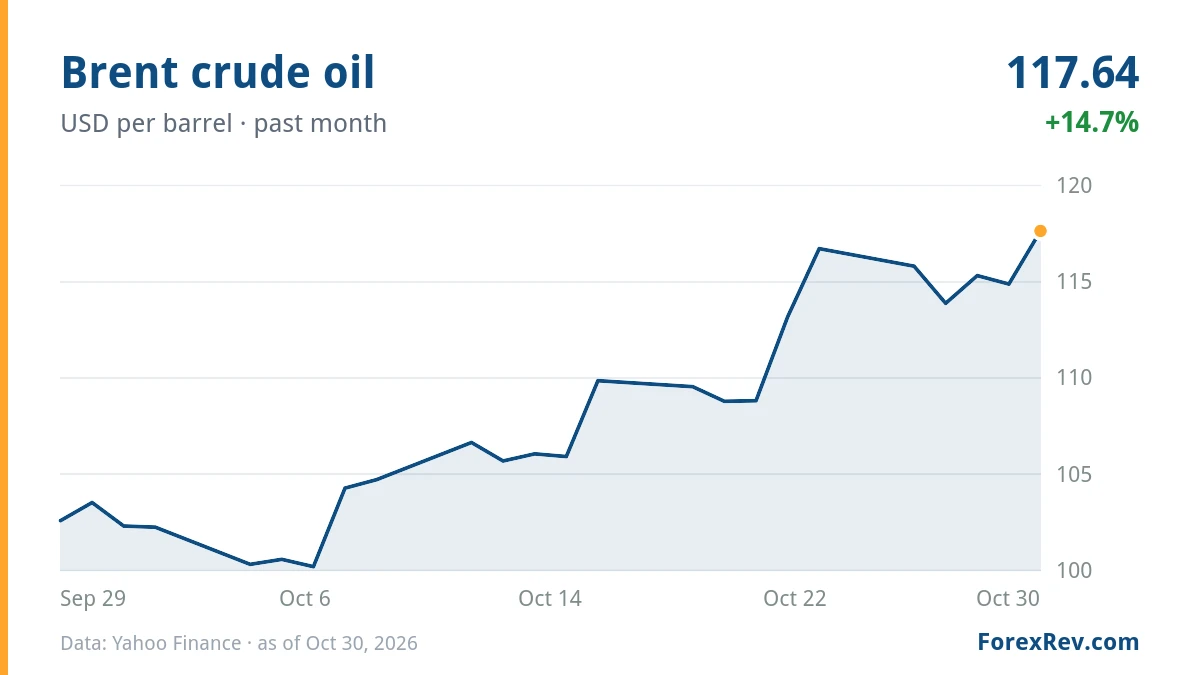
- 116.90 USD – peak Friday price for ICE Brent contracts
- 104.12 USD – settlement level for WTI crude oil
- 30 vessels targeted throughout October as confirmed by IMO data
- 21 USD per barrel freight cost, up from 6.50 USD recorded in September
Naval mine detonations in the strategic corridor
State media and regional outlets including Al Jazeera reported that the IRGC claimed three tankers struck naval mines along what Iranian authorities designated an unauthorised route near the coast of Oman. Iran's military confirmed a fourth ship caught fire further east of the waterway.
Concurrently, the United Kingdom Maritime Trade Operations reported that two explosive charges were attached to a tanker hull by a small boat approximately 25 nautical miles northeast of Khasab, Oman. IRGC spokesman Hossein Mohebi questioned assertions by U.S. Central Command that primary shipping lanes were fully cleared, demanding independent verification.
“Prove the claim that the Strait of Hormuz has been cleared of mines with independent evidence, not a statement”
— Hossein Mohebi, IRGC spokesman (via CNBC)
UKMTO WARNING 187-26 UPDATE 001
Click here to view the full product⤵️https://t.co/ashHdPmfaI#MaritimeSecurity #MarSec pic.twitter.com/PO5X3LlNCO
— UKMTO Operations Centre (@UK_MTO) October 30, 2026
Market volatility and crude benchmarks
The escalating geopolitical frictions promptly pushed the crude oil price upward across major trading exchanges. ICE Brent futures approached $117 per barrel on Friday, while West Texas Intermediate settled at $104.12 per barrel.
Earlier strikes claimed by Houthi forces against major Saudi refining assets, including the Ras Tanura complex, had already strained supply lines as recorded in previous crude oil market coverage. Geopolitical risk continues to prop up the greenback, with the U.S. Dollar Index hovering near 101.96.
Shipping routes adjust to elevated threat levels
According to figures from the International Maritime Organization, at least 30 vessels were struck in October, leaving 16 mariners injured. Despite the danger, tanker operators have deployed shuttle mechanisms to maintain outbound supplies.
Data tracked by Kpler showed crude exports via the chokepoint averaged 11.1 million barrels per day in October, just 2% lower than September levels. However, operating within the conflict area has driven shipping expenses up from $6.50 to $21 per barrel, representing up to 30% of delivered cargo costs.
What to watch next
- Independent verification of mine-clearing operations across the Hormuz transit corridors
- White House military reviews following the upcoming November midterm elections
- Export flow updates from tracking firms monitoring daily Strait of Hormuz tanker voyages
Frequently asked questions
Why does the crude oil price react quickly to events in Hormuz?
The Strait of Hormuz carries roughly 20% of global oil shipments. Threats to commercial traffic generate rapid increases in insurance premiums and commodity prices.
What caused the four tankers to catch fire?
Tehran reported that the ships struck naval mines while navigating routes it claimed were unauthorised near Oman.
Have oil flows stopped through the Strait of Hormuz?
Kpler data shows flows remained resilient at roughly 11.1 million barrels per day in October, though freight costs surged to $21 per barrel.
Sources: Al Jazeera, CNBC, money.pl, Forsal, Yahoo Finance.
Disclaimer: This article is for information purposes only and does not constitute investment advice. Data as of Oct 31, 2026, 06:05 may vary by source. Trading leveraged CFDs carries a high risk of losing money.
This article contains AI-generated content.